
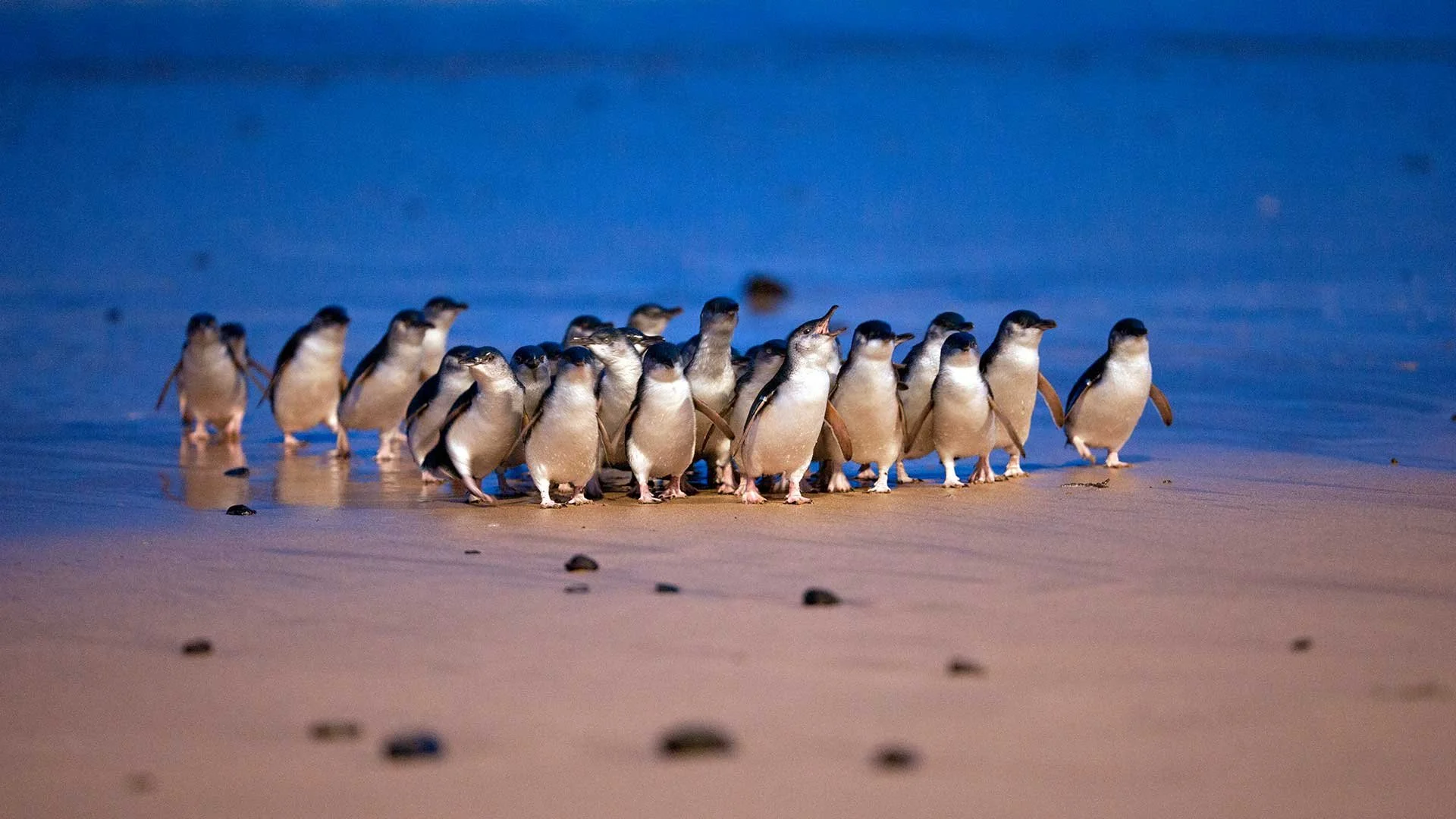
=Phillip Island Penguin Parade
The Penguin Parade is a nightly wildlife-viewing event held at Phillip Island Nature Parks in Victoria, Australia. It showcases the world’s largest colony of little penguins (Eudyptula minor) as they return from the sea to their burrows at Summerlands Beach. The experience has become one of Australia’s most popular eco-tourism attractions.
Key facts
Location: 1019 Ventnor Road, Summerlands, Phillip Island VIC 3922
Operated by: Phillip Island Nature Parks
Schedule: Nightly at sunset, year-round
Main species: Little penguin (Eudyptula minor)
Founded: Public viewing established mid-20th century; Visitor Centre opened 2019
Experience and viewing options
Visitors watch penguins waddle ashore from tiered grandstands and elevated boardwalks designed to minimize habitat disturbance. Ticketed options include General Viewing, Penguins Plus, Underground Viewing (eye-level glass windows), and guided eco-tours such as the Ultimate Adventure Tour. All experiences emphasize conservation education and limit flash photography to protect the penguins’ vision.
Conservation significance
The parade supports Phillip Island Nature Parks’ self-funded conservation model. Revenue contributes to habitat restoration and predator control on the Summerland Peninsula, where residential areas were removed to restore penguin habitat. Around 40,000 little penguins now breed on the island, making it a key refuge for the species.
Visitor facilities and accessibility
The award-winning Penguin Parade Visitor Centre offers exhibits, a café, and retail outlets. It features wheelchair-accessible pathways, sensory-friendly zones, and viewing areas for people with mobility needs. The centre typically opens a few hours before sunset, with recommended arrival about one hour prior to penguin landfall.
Cultural and ecological impact
The Penguin Parade symbolizes Australian wildlife conservation success. It draws more than half a million visitors annually, balancing tourism with strict environmental management. Its operations exemplify sustainable eco-tourism and continue to fund long-term research into the behavior and survival of little penguins.